
Stock Market
Live WirePulse of the Street: Profit booking snaps four-week rally; markets brace consolidation?
This is worth watching because it affects how founders, investors, and operators read the next business cycle.
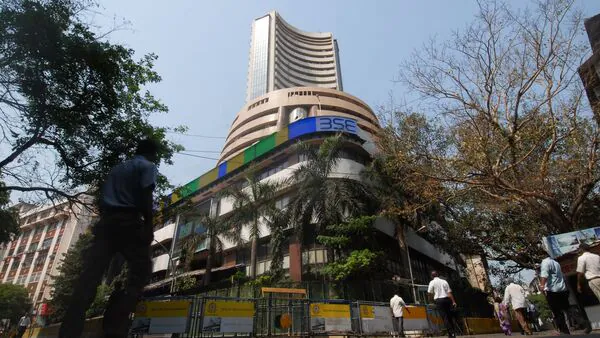
Both indices fell nearly 1.2% on Friday, with the Nifty closing at 25,607.20 and the Sensex at 83,339.26.(Mint)SummaryIndian equities succumbed to profit booking after a nearly 13% November rally, while global technology stocks rebounded and metals remained under pressure. Investors will now look to GDP data for cues on growth and foreign flows.Gift this articleCheck your portfolioThis is a Mint Premium article gifted to you.Subscribe to enjoy similar stories.
Domestic equities snapped a four-week winning streak as investors booked profits following a sharp month-long rally. The Nifty 50 and Sensex declined 0.7-0.8% during the week, despite foreign portfolio investors (FPIs) buying nearly ₹31,500 crore worth of Indian equities, according to data from National Securities Depository Ltd.
Both indices fell nearly 1.2% on Friday, with the Nifty closing at 25,607.20 and the Sensex at 83,339.26, making India the worst-performing major equity market of the week.
The decline does not necessarily signal a reversal in the broader market trend, said Siddhartha Khemka, head of research at Motilal Oswal Financial Services’ wealth management arm.
Some cooling was inevitable after a nearly 13% rally this month, particularly with valuations remaining elevated in parts of the broader market, he said. Improving market breadth, ample domestic liquidity and strong foreign inflows, however, suggest investor confidence remains intact, added Khemka.
Information technology stocks led sectoral gains, with the BSE IT index rising around 4%, followed by realty stocks, which gained 2%.
The IT rally coincided with a recovery in global technology stocks, particularly those exposed to the semiconductor and artificial intelligence (AI) supply chains.
Khemka attributed the rebound to value buying following the recent correction in AI-linked stocks. While demand for computing infrastructure, semiconductors, data centres and cloud services remains strong, making it a long-term opportunity, but investors are increasingly looking for evidence that AI investments can translate into sustainable earnings and returns, he said.
Vijay Kuppa, CEO of InCred Money, said the AI investment cycle still has considerable room to grow. However, the focus is shifting from building infrastructure to wider enterprise adoption and demonstrating measurable gains in revenue, margins and returns on capital.
Metals were the biggest sectoral laggards, declining nearly 4%. Telecommunications stocks also fell around 4%, while banking stocks lost 2%.
Kuppa attributed the weakness in metals to a stronger dollar, expectations of higher interest rates and concerns over Chinese demand. Uncertainty over the pace of AI infrastructure spending also weighed on sentiment, he said.
Global equities fared considerably better, led by Taiwan’s Taiex, which surged nearly 10%. Brazil’s Ibovespa gained 6%, while the S&P 500 and Japan’s Nikkei advanced around 4% each.
The gains in Taiwan, Japan and the US reflected renewed interest in technology stocks and the AI trade. Kuppa attributed the recovery to bargain hunting following the recent sell-off and confidence in the sector’s long-term prospects.
India’s underperformance, despite strong foreign inflows, raises questions about whether global investors are making tactical allocations or building longer-term exposure to Indian equities.
Investors will now turn to India’s September-quarter GDP data for cues on the economy's momentum. This will also weigh on foreign investor sentiment.
Sourced from KnowledgeLoop