
Policy
Live WireA bigger Brics, a heavier economy but a harder consensus, explained in charts
This matters because regulatory changes can alter compliance work, capital flow, and go-to-market choices for founders and investors.
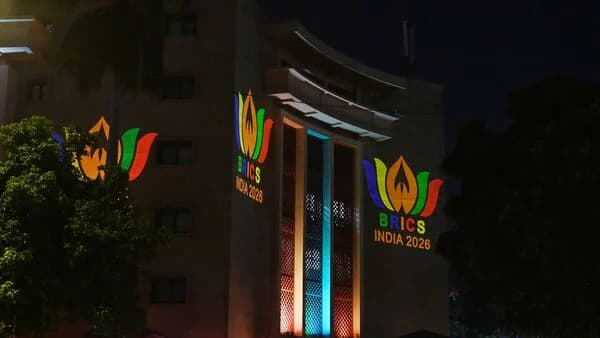
Brics has become significantly larger and more economically powerful, expanding from five members to 11, with Indonesia the latest addition. (ANI)SummaryThe expanded Brics+ bloc boasts growing global GDP share and strong intra-trade, but internal political divisions and India’s import reliance remain big challenges.Gift this articleCheck your portfolioThis is a Mint Premium article gifted to you.Subscribe to enjoy similar stories.
The 18th Brics summit, being hosted by India on 12-13 September, comes at a crucial geopolitical moment. The bloc has expanded, positioning itself as a multipolar alternative to Western-dominated institutions, giving it greater economic weight and a broader claim to represent the Global South. However, its size also brings a new challenge: internal rivalries. With more geopolitical competitors now sitting around the same table, the summit this year will test the limits of the global bloc as well as how it brings consensus amid deep divisions within its own ranks.
What was originally a group of five nations has now expanded to 11, with Indonesia being the latest addition. Adding to its economic strength, the Bloc now accounts for 29.1% of the global GDP in 2025, up from 19.7% in 2009, when the Bloc was formed. Though the Brics+ GDP is dominated by China, accounting for 60.4% of the total, India and Russia also bring economic and political heft. The bloc has also closed its gap with the G7—a group of seven countries including the US, the UK, Germany, and France, among others. G7’s GDP share, which stood about 33 percentage points higher than Brics', now is only 15 percentage points higher compared to the expanded group.
Despite its growing economic footprint, the bloc remains divided by internal frictions. The most prominent fault line this year has emerged between the UAE, Saudi Arabia and Iran, the two countries on opposite sides of the West Asia war that began in February. The conflict has seen Iran launch attacks against the UAE and Saudi Arabia, the latter being a key US ally, further exposing the geopolitical contradictions within the bloc. As a result, the Brics Foreign Ministers' Meeting in New Delhi concluded without a joint declaration. The host country, India, issued only a chair's statement and an outcome document, indicating a breakdown in consensus among member states. These frictions go beyond the current year, with India and China known as economic competitors and geopolitical rivals.
Brics has made a de-dollarization push to reduce reliance on the US dollar to protect member states from sanctions and currency volatility. The efforts even invited the ire of US President Donald Trump last year when he threatened a 100% tariff if the bloc sought to move away from dollars. While a wider de-dollarization has not happened yet and is unlikely to happen anytime soon, the projects funded by Brics’ New Development Bank have seen the share of the dollar decline to below 60%, while other currencies such as the South African rand have seen a rise. After the dollar, the Chinese yuan is often used for financing.
This shift remains slightly uneven. Projects in many of the member countries are still heavily dominated by either the US dollar or their own currency. Over 73.3% of the total value of projects financed by the NDB in China has been funded in yuan, while 57% in India has been funded in rupee.
Similarly, South African rand makes up 29% of the projects funded in the country. While there is a push to move away from the US dollar, other currencies like the euro and Swiss franc—West-dominated currencies—also have a notable presence, especially in China, Brazil, and Russia. Nevertheless, this signals a gradual diversification away from the dollar’s dominance.
One litmus test of a bloc’s internal cohesion is the strength of trade among its members. By this measure, Brics+ appears to have done well. Data from the UN Trade and Development shows that intra-bloc trade has grown substantially since 2009. Brics+ intra-trade stood at $1.2 trillion in 2025, growing 72% since Brics’ formation. If Brics+’s intra-trade stood at $100 in 2009, it had risen to $307 by 2025—well ahead of other major groupings.
Southeast Asia, which has many members from the Asean bloc, followed at $210, while the G20 and EU remained below $200. The rapidly growing trade between Brics+ countries helps its standing at a time when the Western countries are seemingly becoming more closed off.
Brics+ has grown stronger in trade, and India’s trade ties with the UAE and Russia have benefited the country. However, a close look shows India’s trade relationship with the bloc remains notably import-dependent. Brics+ accounted for 41.5% of India’s imports, with China, the UAE and Russia making up a substantial share.
In contrast, the bloc accounted for 22.3% of India’s total exports in 2025–26, highlighting a considerable gap between India’s dependence on the bloc as a source of imports and its ability to export into the grouping. It is also noteworthy that India only has free-trade agreements with two members—the UAE and Indonesia, making a case for a greater push for India’s interests within the bloc since it’s the second-largest country by GDP.
Rupanjal Chauhan is a data journalist at Mint, where she contributes to the Plain Facts and Data Bites sections, focusing on translating complex datasets into clear, insightful, and engaging narratives for a wide audience. Her work focuses on using data to explain policy, economic, and social trends in a clear and accessible way.<br><br>At Mint, her work spans public finances, trade, geopolitics, and employment, often breaking down large datasets into sharp, evidence-backed stories. Her approach focuses on careful data analysis and clear storytelling, ensuring that each piece not only informs but also enables readers to better understand the forces shaping India’s economy and society.<br><br>Rupanjal holds a postgraduate diploma in digital media from the Indian Institute of Mass Communication (IIMC), New Delhi, where she specialised in data-driven storytelling and digital journalism. She also has a bachelor’s degree in journalism and mass communication from St. Xavier’s College, Ranchi. Her work is guided by a focus on simplifying complex data without losing nuance, with an emphasis on accuracy, transparency, and context, helping readers better understand the patterns and trends behind the numbers.
Catch all the Business News , Economy news , Breaking News Events andLatest News Updates on Live Mint. Download TheMint News App to get Daily Market Updates.
Sourced from KnowledgeLoop