
Startups
Live WireExclusive: D2C Grocery Startup Anmasa Bags ₹30 Cr To Expand Into New Markets
This is worth watching because it affects how founders, investors, and operators read the next business cycle.
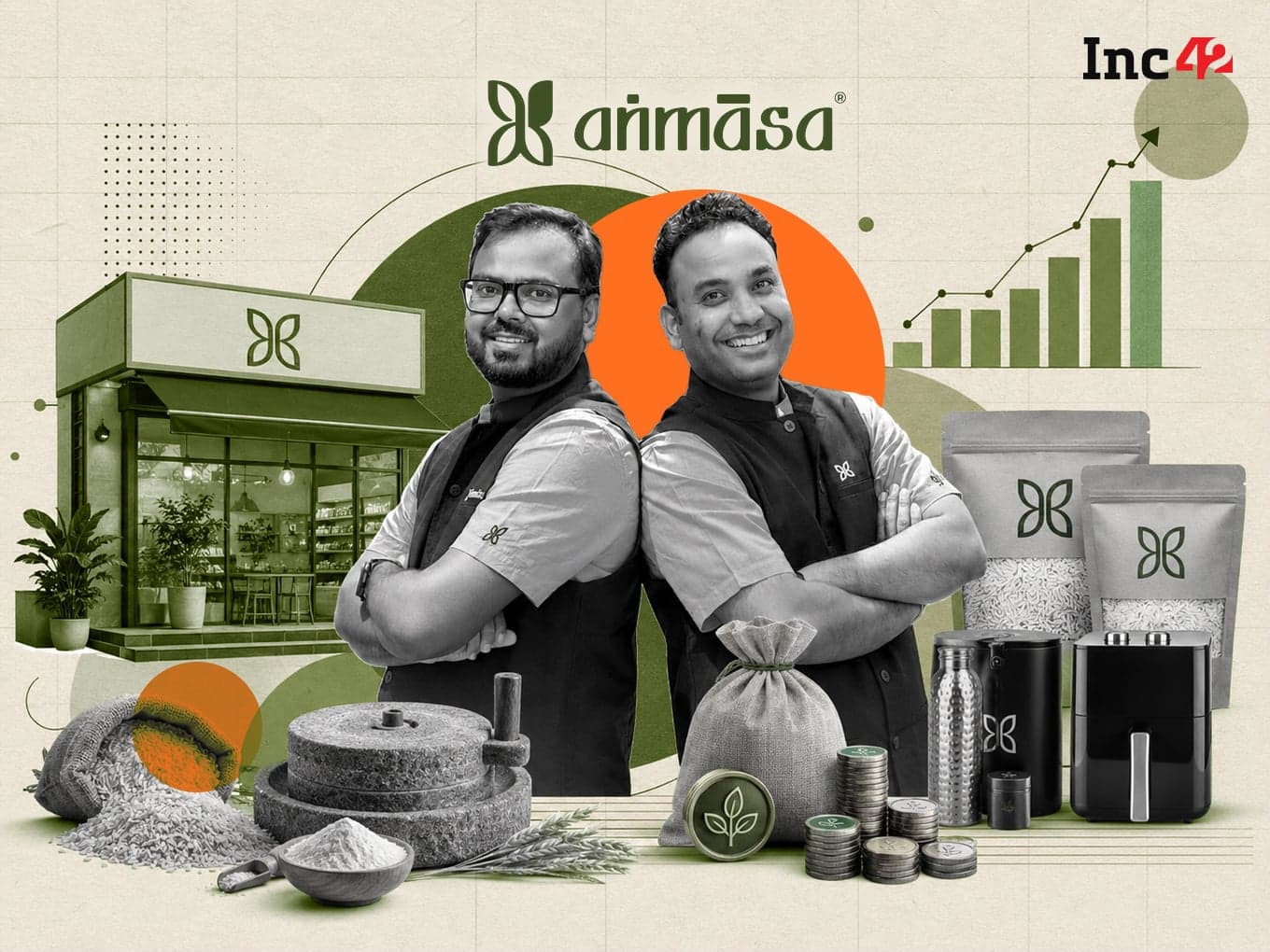
D2C grocery startup Anmasa has raised ₹30 Cr ($3.1 Mn) in a seed round led by Fireside Ventures, with participation from Blume Ventures
Anmasa is betting on a hyperlocal “bright store” model to take made-to-order fresh staples beyond NCR, at a time when consumers are increasingly seeking minimally processed and personalised food products
Anmasa offers around 200 SKUs across minimally processed staples and pantry products, including flour, spices, edible oils, rice, pulses, ghee and dry fruits
The startup has raised ₹47.5 Cr in total funding so far. This includes ₹9.75 Cr raised in a pre-seed round last year and a ₹7.5 Cr in bridge round in January 2026.
Anmasa plans to deploy the fresh capital to enter new cities, open new stores and manufacturing hubs while strengthening its tech infrastructure and leadership teams. A portion of the funds will also go towards product personalisation.
Notably, the startup is also building an enterprise resource planning (ERP) system to track its operations from sourcing and procurement to manufacturing and delivery.
“Technology, team building, expansion. These are the three core areas that we are focusing on moving forward,” cofounder Yatish Talvadia told Inc42.
As part of its expansion plans, the daily essentials brand is eyeing entering the Bengaluru market within the next three to six months, followed by Pune or Hyderabad. The startup has identified 25 cities for potential expansion over the next five years.
Founded in 2024, Anmasa was cofounded by Yatish Talvadia and Shailendra Upadhyay, the former founder of grocery delivery platform Veggie India, which was acquired by Milkbasket in 2019.
Anmasa focuses on producing and selling minimally processed staples and pantry products, including flour, spices, edible oils, rice, pulses, ghee and dry fruits. The startup began with freshly milled flour and has since expanded its portfolio to around 200 SKUs.
The Delhi NCR-based startup follows a neighbourhood micro-manufacturing model, processing staples closer to consumers after an order is placed. Its outlets prepare stone-ground flour, wood-pressed oils and freshly milled spices in small batches.
At the heart of Anmasa’s offerings is its made-to-order flour, which allows customers to customise grain mixes for preferred grind texture in their flour. Instead of stocking pre-packaged flour, the startup holds inventory in grain form and processes it after receiving an order.
Customers can choose from more than thirty varieties of grains, millets and seeds to create multigrain blends and customise flour for regional dishes such as luchi, poori and bhakri.
“Every city is a mini-India, with diverse culinary traditions and nutritional preferences that cannot be served through standardised packaged staples. We founded Anmasa on a simple belief that food should adapt as per the consumer, not the other way around,” Talvadia said.
According to Talvadia, 88% of India’s wheat flour market remains unorganised, while local flour mills often struggle with hygiene and consistency. Anmasa is looking to bridge the gap between local mills and packaged staples brands by combining freshness and customisation.
Sourced from KnowledgeLoop