
Stock Market
Live WireSBI warns of UPI fraud: How the ‘jumped deposit scam’ can drain your bank account
This is worth watching because it affects how founders, investors, and operators read the next business cycle.
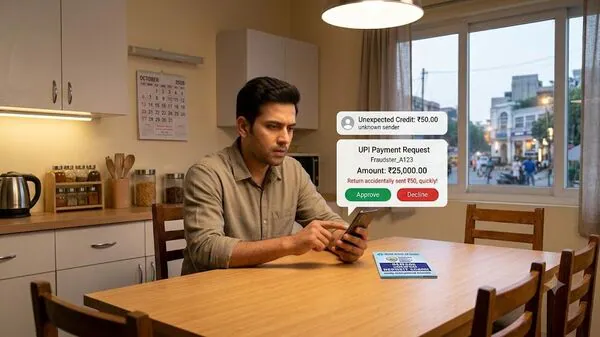
SBI has warned bank customers about the 'jumped deposit scam', where fraudsters exploit unexpected bank credits to trick victims into approving high-value UPI payments. Read on to know more and keep yourself protected from such scams. (AI-generated image for representational purposes only)AI Quick ReadThe State Bank of India (SBI) has issued a serious warning to customers and citizens across the country about a ‘jumped deposit’ scam. In this scam, fraudsters allegedly exploit unexpected banking credits to trick innocent victims into authorising high-value payments through the Unified Payments Interface (UPI).
Having a clear understanding of this scam and its various forms is vital for citizens in order ot protect their financial interests. Keeping this in mind, let us discuss the basics of this scam in detail and the ways that can be deployed by individuals to keep themselves safe.
In a post on X on 10 October 2026, as part of its National Cyber Security Month Special Campaign 6.0, SBI urged customers to remain aware and vigilant when someone claims to have mistakenly transferred money and asks for its return. This simply means that the scam is generally initiated by a seemingly harmless transfer into your account from someone completely unknown to you.
Fraudsters claim that they have accidentally credited a small, relatively harmless-looking amount to a victims account. Based on the same, they request a quick refund. In order to make the victim act immediately, they create urgency and use emotional pressure to persuade the account holder to act without checking the transaction details or any background information.
The actual trap here involves tricking the victim into approving a high-value UPI payment request after initially establishing a quick connection. Once such a request is acknowledged and acted upon, the funds are transferred swiftly into the fraudster's account. Banking customers, hence, should avoid authorising unfamiliar requests or following the caller’s instructions without independent verification of basic information and facts.
SBI has cautioned customers against emotional blackmail, tricks, and persuasion by financial fraudsters, as well as emergency UPI requests without confirmation.
To keep themselves safe, SBI has advised customers to block suspicious phone numbers immediately, avoid establishing contact with unknown individuals through phone calls, and report such incidents promptly to their respective banking institutions. If you have received any unexpected credit, you should verify it through your bank's official channels rather than rushing to return the money.
The bank also urged customers to respond to calls prefixed with 1600, describing them as genuine and secure bank calls. However, customers should still carefully verify the caller’s identity and the purpose of any request before sharing information or authorising transactions.
🚨 Unexpected credit in your account? It’s a Trap!
In a Jumped Deposit Scam, scammers claim to have "accidentally" credited a small amount to your account to win your trust. When you try to return it, they trick you into approving a high-value payment request.
⚠️ Block the number immediately and report this to the Bank on Priority.
⚠️ Don’t fall for emotional blackmail or emergency UPI requests without confirmation.
✅ Always respond to calls prefixed with 1600 — It’s genuine, it’s secure, it’s your Bank.
The complete message can also be found in the following tweet, which includes a valuable video that can help individual bank account holders better understand the fraud protection mechanism and defend themselves against it.
Therefore, the key takeaway is to carefully check, remain calm, and verify unexpected credits independently. Make sure you never approve any unfamiliar or unknown UPI requests under pressure or when emotional, and contact your banking institution through its official channels if a transaction appears suspicious or illegitimate.
Sourced from KnowledgeLoop