
Stock Market
Live WireMissed SIP installment? Know the impact on your bank account, CIBIL score and investments
This is worth watching because it affects how founders, investors, and operators read the next business cycle.
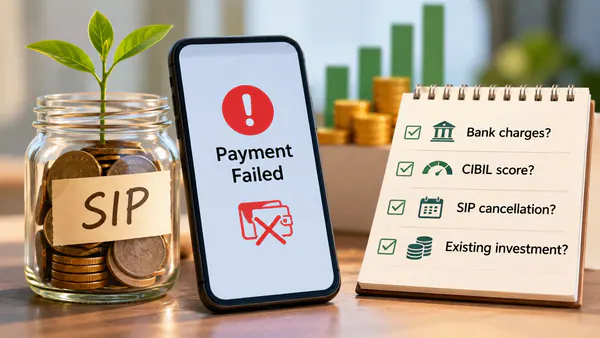
SIP payment bounce: Will you lose your mutual fund units or face a penalty? Explained (AI-Generated Image)AI Quick ReadA failed systematic investment plan (SIP) payment can leave mutual fund investors wondering whether they will face penalties, see their credit score take a hit or lose the money they have already invested.
However, a missed SIP instalment does not automatically affect an investor's existing mutual fund holdings. It is also not treated in the same way as a missed loan EMI or an unpaid credit card bill.
While a failed debit may attract bank charges and repeated failures can eventually lead to the cancellation of an SIP, investors should understand the distinction between these consequences, CNBC TV18 reported.
A failed SIP debit may attract a charge from the bank, particularly if the transaction fails because of insufficient funds or an issue with the auto-debit mandate.
Banks may levy a return or dishonour charge for such failed transactions. This fee is separate from any charges that a mutual fund house may impose.
The amount varies depending on the bank and the type of account. Investors should check their bank's latest schedule of charges to determine whether a fee applies.
An SIP is an investment instruction, not a borrowing obligation. Therefore, a failed SIP debit is generally not treated like a missed loan EMI or an unpaid credit card bill.
Credit scores are primarily influenced by an individual's borrowing and repayment behaviour. Since an SIP does not involve credit, a failed payment does not automatically affect an investor's credit score.
Yes. While a single failed instalment may not have a significant impact on an existing investment, repeated debit failures can result in the SIP being cancelled.
Under the industry's framework, the cancellation thresholds depend on the frequency of the SIP:
Daily, weekly, fortnightly and monthly SIPs: These may be cancelled after three consecutive failed debit attempts.
SIPs with a lower frequency: SIPs scheduled every two months, quarterly, half-yearly or annually may be cancelled after two consecutive failed debit attempts.
Once an SIP is cancelled, future contributions stop unless the investor registers a new SIP.
A failed SIP payment does not automatically affect the mutual fund units accumulated through earlier instalments.
Those units remain invested in the scheme and continue to be subject to market gains or losses. The cancellation of an SIP only stops future contributions; it does not automatically redeem the units an investor already holds.
Sourced from KnowledgeLoop