
Stock Market
Live WireGFF 2026: NPCI Launches Instant Card-Issuing ATMs, Deepens AI Push
This is worth watching because it affects how founders, investors, and operators read the next business cycle.
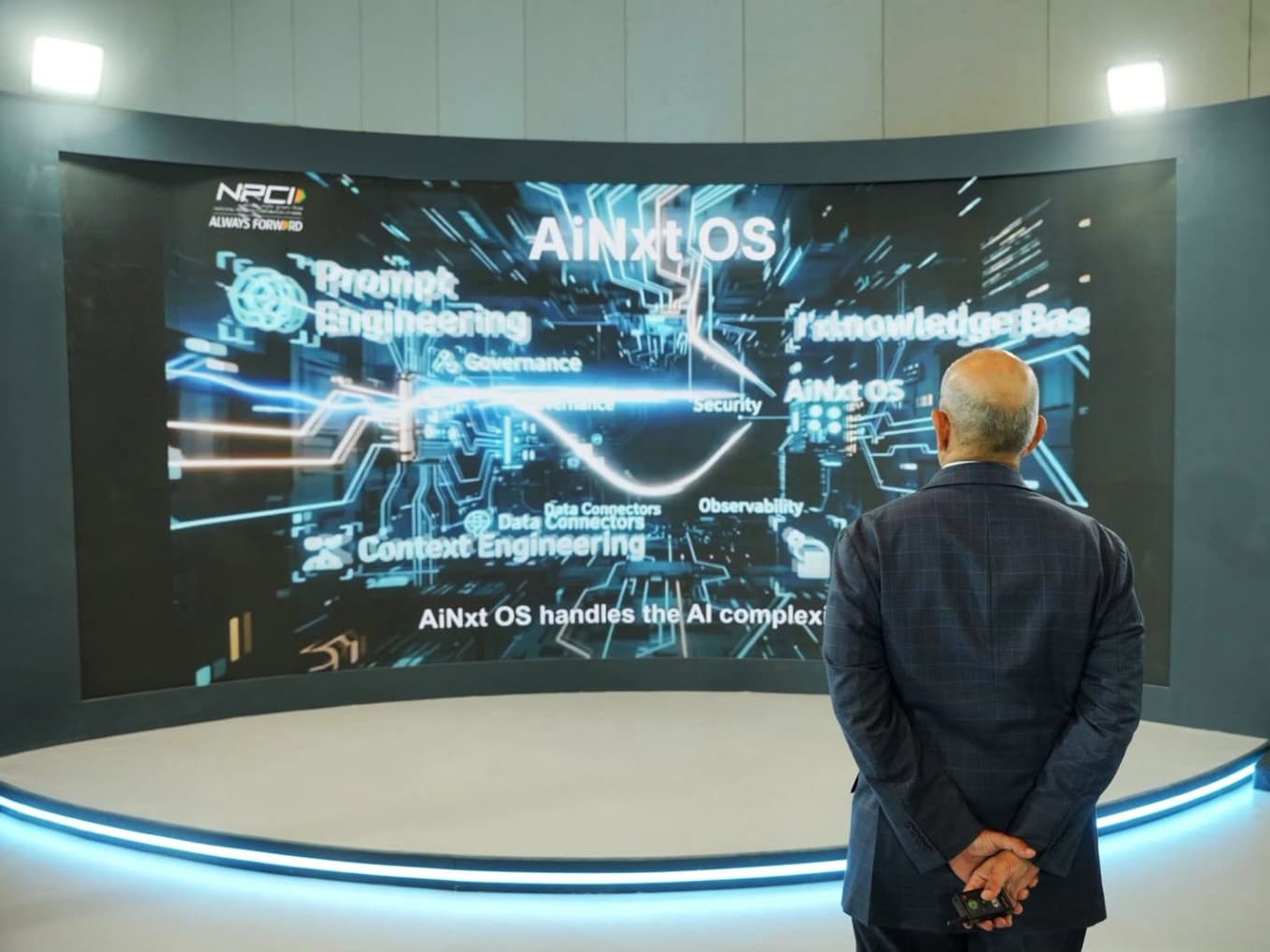
The Department of Financial Services announced several financial inclusion measures while the NPCI launched two AI platforms at the Global Fintech Fest
The launches aim to expand formal credit access to priority sectors, compress card and merchant QR onboarding times from weeks to minutes, and automate workflows for enterprises through the use of agentic AI
The DFS launched Open-Source Android ATMs while expanding UPI on Credit to beneficiaries of government schemes targeting priority sectors
It also unveiled two AI initiatives aimed at streamlining enterprise fintech operations.
Sanjay Lohiya, secretary of the Department of Financial Services (DFS), launched open-source android ATMs. These are designed to function as digital banking units (DBUs) in transit hubs and rural areas, as well as corporate parks and educational campuses, handling account openings, loan applications, and cheque deposits.
They are also capable of instantly issuing RuPay cards and merchant UPI QR codes, reducing onboarding turnaround times from weeks to minutes.
“The solution aims to expand the role of ATMs from just cash withdrawal and deposit machines to intelligent customer service and banking access points. Customers can receive their cards directly from the machine without waiting for courier delivery or making a branch visit, while merchants can obtain QR codes instantly for UPI-based payment collections,” the NPCI said in a statement.
Nine major lenders, including State Bank of India, Bank of Baroda, and Slice Small Finance Bank, are trialling the ATMs alongside manufacturers Hitachi Payment Services, Perto India, and Vortex Engineering.
The NPCI rolled out AiNxt, an open-source, enterprise-grade agentic AI platform designed to build, test, and deploy custom intelligent agents.
The suite incorporates four core components: AiNxt OS, AiNxt Code (a plugin for integrated development environments or IDEs), AiNxt CLI, and AiNxt Enterprise. These will enable development teams to build, test, and deploy across IDEs and command-line environments.
The platform can be used to build custom AI harnesses directly within existing development environments. Under a Bring Your Own Models (BYOM) framework, it enables AI agents to be deployed through low-code, no-code tools.
Additionally, the NPCI also unveiled agentic orchestration & messaging (AtOM), an AI-driven agentic orchestration platform engineered to handle complex integration, change management, and partner onboarding across UPI. The platform produces digitally signed, machine-readable interactions to establish verifiable audit trails for compliance.
Besides these, the NPCI is also expected to launch an ‘Unified Agent Protocol’ at the GFF. This would be a framework which would see AI agents execute small-ticket digital payments without requiring explicit user authorisation for every transaction.
In addition to the above launches, the Ministry of Finance also expanded the ‘Credit Line on UPI’ facility to cover government-backed priority sector credit schemes, the Kisan Credit Card (KCC) and PM MUDRA Yojana (PMMY). The integration allows beneficiaries to link pre-sanctioned credit lines directly to UPI for digital merchant transactions.
The overall credit base under these schemes spans over 7.7 Cr active KCC accounts with sanctioned limits exceeding ₹10 Lakh Cr and more than 57 Cr PMMY loans totaling over ₹40 Lakh Cr.
Sourced from KnowledgeLoop