
Policy
Live WireGST collections jump 14% to ₹1.95 trillion in June, buoyed by higher import taxes
The stronger GST intake helps the government stay on track to meet its FY27 fiscal deficit target of 4.3% of GDP, reducing reliance on borrowing. For founders, operators, and investors, the data signals continued economic resilience and a supportive tax environment for businesses engaged in import‑related activities.
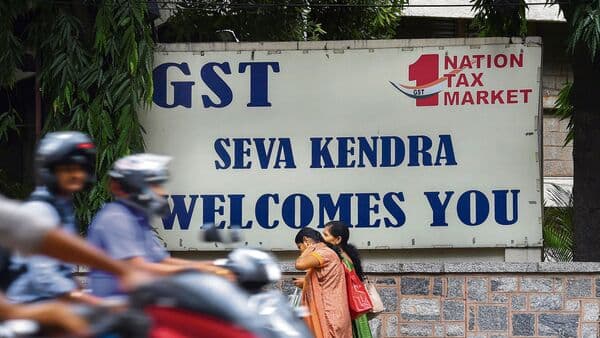
GST refunds rose 29.1% during the month. (PTI)AI Quick ReadNew Delhi: The Centre and states together collected ₹1.95 trillion in gross goods and services tax (GST) revenue in June before adjusting for refunds, marking a 13.9% year-on-year increase, according to data released by the finance ministry on Wednesday.
The growth was driven by a sharp rise in GST revenue from imports, which surged 34.6% year-on-year to ₹60,038 crore. Domestic GST collections increased 6.5% to ₹1.35 trillion.
After adjusting for refunds, net GST mop-up stood at ₹1.62 trillion, up 11.2% from a year earlier. GST refunds rose 29.1% during the month to ₹32,436 crore, reflecting faster processing of claims.
The June collections suggest economic activity remained resilient despite global uncertainties, with higher imports and steady domestic transactions supporting tax revenues.
During the first quarter of FY27 (April-June), gross GST collections rose 8.4 % year-on-year to ₹6.32 trillion, compared with ₹5.83 trillion in the corresponding period of the previous financial year. Net GST revenue increased 7.1 % to ₹5.40 trillion during the period.
"The consistent growth in GST collections is a clear bellwether of the Indian economy's underlying resilience, demonstrating that domestic consumer demand remains robust despite persistent global geopolitical headwinds," said Saurabh Agarwal, tax partner at EY India.
The accelerated pace of GST refunds highlighted the government's commitment to improving business liquidity and easing working capital pressures, he said.
Agarwal said the rising share of GST collections from imports warranted closer structural analysis, suggesting that unutilised allocations under the production-linked incentive (PLI) schemes could be redeployed to attract and scale high-value manufacturing within the country.
Among major states, Uttar Pradesh remained the top performer, recording a 19% increase in collections to ₹9,165 crore in June. Assam posted a 17% rise, while Punjab reported 14% growth. Maharashtra, the country's largest GST-contributing state, reported a 9% increase in collections to ₹30,714 crore.
States that witnessed a decline include Tamil Nadu, which saw a 2% decline, while mop-up in Rajasthan and Madhya Pradesh fell 5% each.
According to Vivek Jalan, partner, Tax Connect Advisory Services LLP, the June numbers underscored the resilience of domestic consumption as well as the strength of external trade. He noted that while net GST collections rose 11.2%, net domestic revenue increased 2.6% despite GST 2.0 rate reductions and the continued impact of accumulated input tax credit on inventories.
The jump in import revenues points to strong demand for capital goods and raw materials that support industrial growth, Jalan said, adding that collections were also aided by pre-deposits made for GST Appellate Tribunal (GSTAT) appeals and enforcement actions ahead of statutory timelines.
Together, these factors reflected stronger tax compliance, effective fiscal management and sustained economic momentum, he said.
Harsh Kumar is a policy reporter at Mint (HT Media Group), where he covers the Ministry of Commerce and Industry along with key departments of the Ministry of Finance, including the Department of Economic Affairs (DEA) and the Department of Financial Services (DFS). With over five years of experience in business and economic journalism, he has developed strong expertise in tracking policy developments and their wider economic impact.<br><br>He has previously worked with Business Standard, Moneycontrol, and Outlook Money, where he reported extensively on banking, financial services, and the broader economy. Over the years, he has built a reputation for delivering accurate, insightful, and impactful stories, supported by a keen eye for detail and a consistent track record of breaking exclusive news.<br><br>An alumnus of Jamia Millia Islamia, Harsh closely follows regulatory changes and key economic trends shaping India’s financial and industrial landscape. His reporting aims to simplify complex policy issues for a wider audience while maintaining depth and credibility.<br><br>Outside of work, he enjoys tracking policy developments, finding scoops, and travelling, reflecting his curiosity about how economic decisions shape everyday life.
Catch all the Business News , Economy news , Breaking News Events andLatest News Updates on Live Mint. Download TheMint News App to get Daily Market Updates.
Sourced from KnowledgeLoop