
Climate & Energy
Live WireZomato’s Latest Fee, Weekly Funding Rundown & More
This is worth watching because it affects how founders, investors, and operators read the next business cycle.
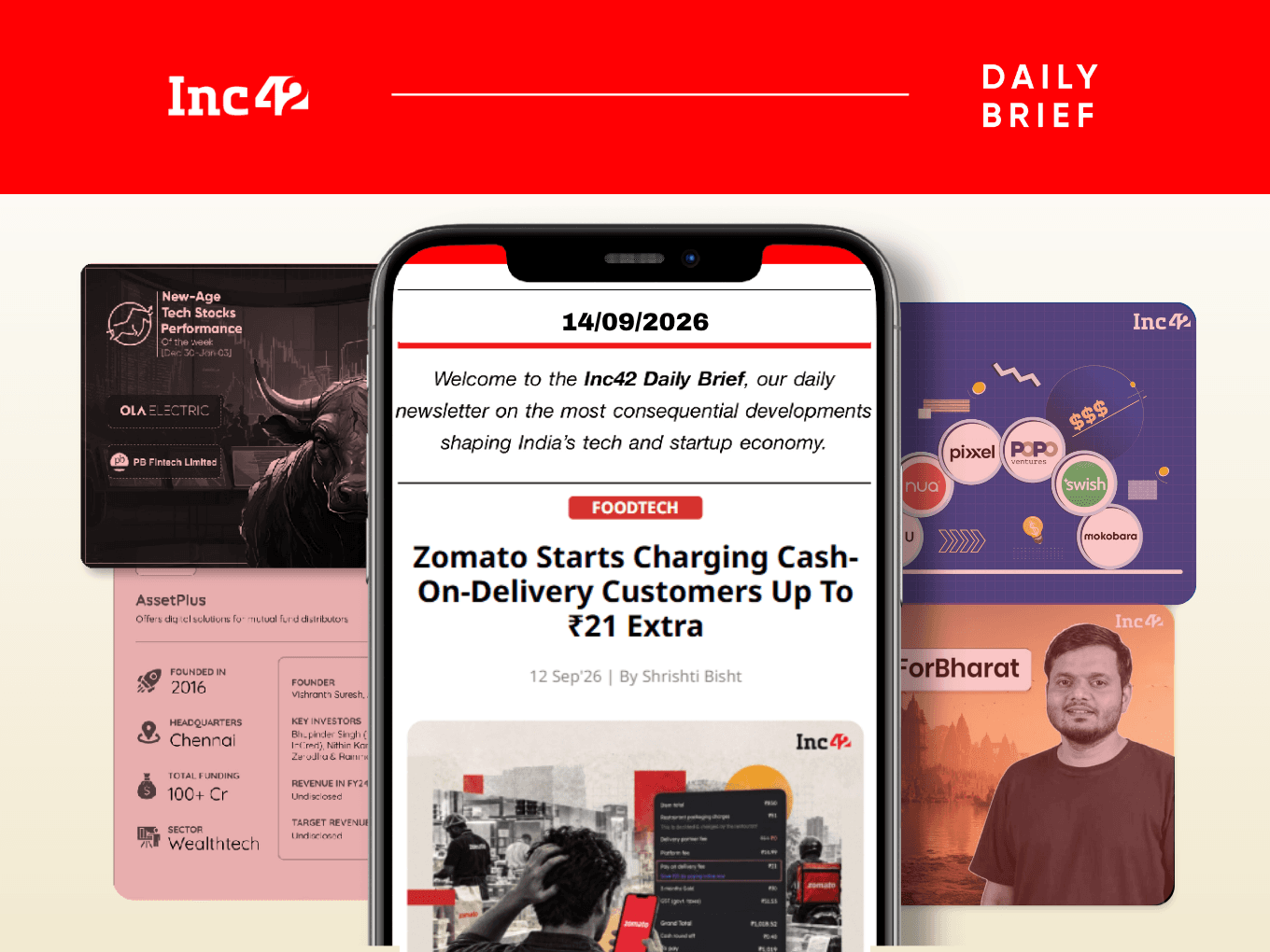
A Fee For Paying Cash: The new “pay on delivery” charge has appeared on select Zomato orders, making COD more expensive. The amount varies between ₹5 to ₹21, and is separate from platform, delivery, packaging and other tax charges. All said and done, the move means that cash on delivery is no longer simply a payment choice.
The New Monetisation Layer: For Zomato, the latest fee opens another high-margin channel that monetises its sticky customer base. The levy also penalises a specific behaviour. By making cash payment costlier, Zomato aims to recover handling costs, reduce order risk and encourage online payments.
But the COD levy also adds another variable charge to a user’s food bill. Paying in cash, often a matter of preference or necessity, is now being treated as a premium choice.
A Recurring Pattern? Zomato’s latest levy is not an isolated pricing tweak but part of a recurring pattern. Earlier this year, it hiked the platform fees by nearly 20% to ₹14.90 per order from ₹12.50 earlier. For a food delivery business seeking better margins, the latest levy appears to be an easy lever to pump up revenue.
Rivals Close In: Zomato’s latest monetisation move comes amid intensifying competition in the food delivery space. Flipkart is piloting Eat In, Rapido is scaling its zero-commission Ownly play, and newer players such as Swish are expanding rapidly. These challengers may not yet threaten Zomato’s dominance, but they could force the Eternal-owned platform to defend users and restaurants more aggressively.
So, will the latest fees make Zomato more resilient or give rivals an opening to gain users? Let’s find out…
A resume can list a professional’s history, but it rarely captures working style or ambition. Profound is building an AI platform that learns who a person is, and then works in the background to create opportunities, introductions and career momentum.
Building An AI Persona: Founded in 2026, Profound is positioning itself as an AI-native professional networking platform. The startup helps users create their AI representative, akin to the managers that represent actors. After a roughly 30-minute voice conversation, the platform learns about a user’s expertise, experience, working style and career ambitions.
Layers Of Context: Profound’s tech stack spans understanding, representation, connection and amplification. Voice AI and multimodal interfaces build a detailed model of the user, while multiple AI systems generate professional content, explain expertise, facilitate introductions and proactively surface relevant networking or career opportunities.
Catering To Enterprises: The startup is also developing a B2B hiring product for startups. It aims to help companies discover candidates, assess role fit and identify gaps that require further verification. Profound now plans to ramp up hiring, product development and AI capabilities as it searches for a product-market fit.
With India’s staffing and recruitment market expected to become a ₹15,770 Cr opportunity by FY29, can Profound’s AI stack replace the static resume?
From a personal health project to now its first Brain Flow validation study, here’s a look at how far Deepinder Goyal-led healthtech startup Temple has come….
Sourced from KnowledgeLoop