
Policy
Live WireIndia’s Q2 GDP growth to slow marginally to 7.6%, shows Mint poll
This matters because regulatory changes can alter compliance work, capital flow, and go-to-market choices for founders and investors.
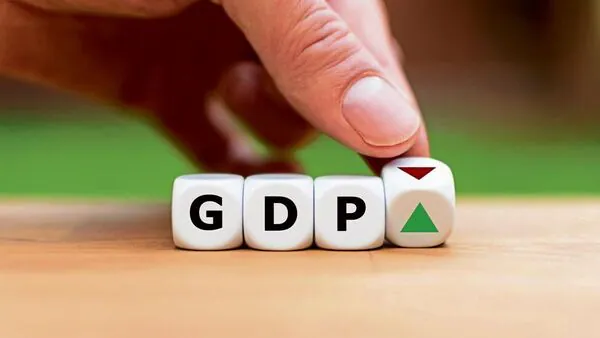
Economists polled by Mint have projected GDP growth in the range of 7.2-8%.SummaryA deficient monsoon and uneven rural demand may have weighed on growth, while resilient manufacturing and services activity are expected to have supported the economy.Gift this articleCheck your portfolioThis is a Mint Premium article gifted to you.Subscribe to enjoy similar stories.
A deficient monsoon, uneven rural demand, and persistent external headwinds may have moderated India’s economic growth to 7.6% in the second quarter (July-September) of FY27 from 7.8% in the previous one, a median estimate of 14 economists polled by Mint showed. GDP data for the second quarter is scheduled to be released on 30 November.
If the projections hold, growth will have remained above 7% for the fifth consecutive quarter, but below the 8.1% recorded a year ago. Economists polled by Mint have projected GDP growth in the range of 7.2-8%.
Manufacturing and services activity remained resilient during the quarter. Industrial production data showed manufacturing output grew 8.1% year-on-year, while strong credit growth and auto sales pointed to continued domestic demand.
"Given the robust high-frequency macroeconomic indicators and healthy corporate performance, we expect GDP growth in Q2 FY27 to hold steady at 7.6%," CareEdge said in its Q2 GDP preview. Its analysis of around 1,600 listed non-financial companies found that revenue and profitability grew by more than 20% year-on-year during the quarter.
However, the weak monsoon is expected to have weighed on agricultural activity. Southwest monsoon rainfall was around 13% below the long-period average (LPA), while kharif sowing was marginally lower than a year ago. Lower real rural wages and a decline in tractor sales also point to weakness in rural demand.
"Sub-par monsoons are expected to have weighed on agri GVA growth in the quarter, amid the dip in kharif sowing and a likely adverse impact on crop yields," said Aditi Nayar, chief economist at Icra. The rating agency expects GDP growth to ease to 7.5% from 7.8% in the previous quarter, with agricultural GVA growth slowing sharply to 0.2%.
Services are expected to remain a key growth driver, supported by financial, real estate and professional services. Manufacturing activity has also held up, aided by corporate profitability and demand for capital goods. However, contracting mining output and subdued air traffic may have offset some of the gains.
The gap between GDP growth and gross value added (GVA) growth will also be watched closely. GVA measures output across sectors, while GDP includes net indirect taxes. Nirmal Bang estimates GVA growth at 8% in Q2, compared with its GDP growth estimate of 7.6%. CareEdge expects GVA growth of 7.7%, against GDP growth of 7.6%.
The second-quarter data will also offer clues on the durability of domestic demand, particularly as economists expect a moderation in growth in the second half of FY27 amid agricultural and rural demand pressures, rising input costs and a less favourable base.
Payal Bhattacharya is a data journalist at Mint, and writes analytical stories for the Plain Facts section. She has over nine years of experience covering the Indian economy. Her work focuses on core macroeconomic indicators such as GDP, inflation, employment and the labour market, the informal sector, and government policies. She holds a Master’s degree in Economics, which underpins her ability to interpret official data releases, identify larger trends, and explain what they mean to the lay reader in practical terms. She closely tracks data like the national accounts, inflation indices, and labour surveys to produce clear, evidence-based reporting. Known for her clarity and precision, Payal focuses on presenting facts in a straightforward and accessible manner. Her stories place strong emphasis on data credibility, consistency, and context, aiming to help readers understand not just the numbers but also their real-world implications. She is particularly attentive to gaps and limitations in datasets, and highlights them in her stories when relevant. Committed to accuracy and transparency, Payal ensures her work remains a reliable resource for readers seeking to make sense of India’s economic realities.
Catch all the Business News , Economy news , Breaking News Events andLatest News Updates on Live Mint. Download TheMint News App to get Daily Market Updates.
Sourced from KnowledgeLoop